You are a family
Part of you wants to go, and part of you wants to stay. Our language already knows we are many. Saying “a part of me feels this” makes room inside, so no single voice has to speak for all of you.
From Internal Family Systems
Internal Family Solar Systems / IFSS
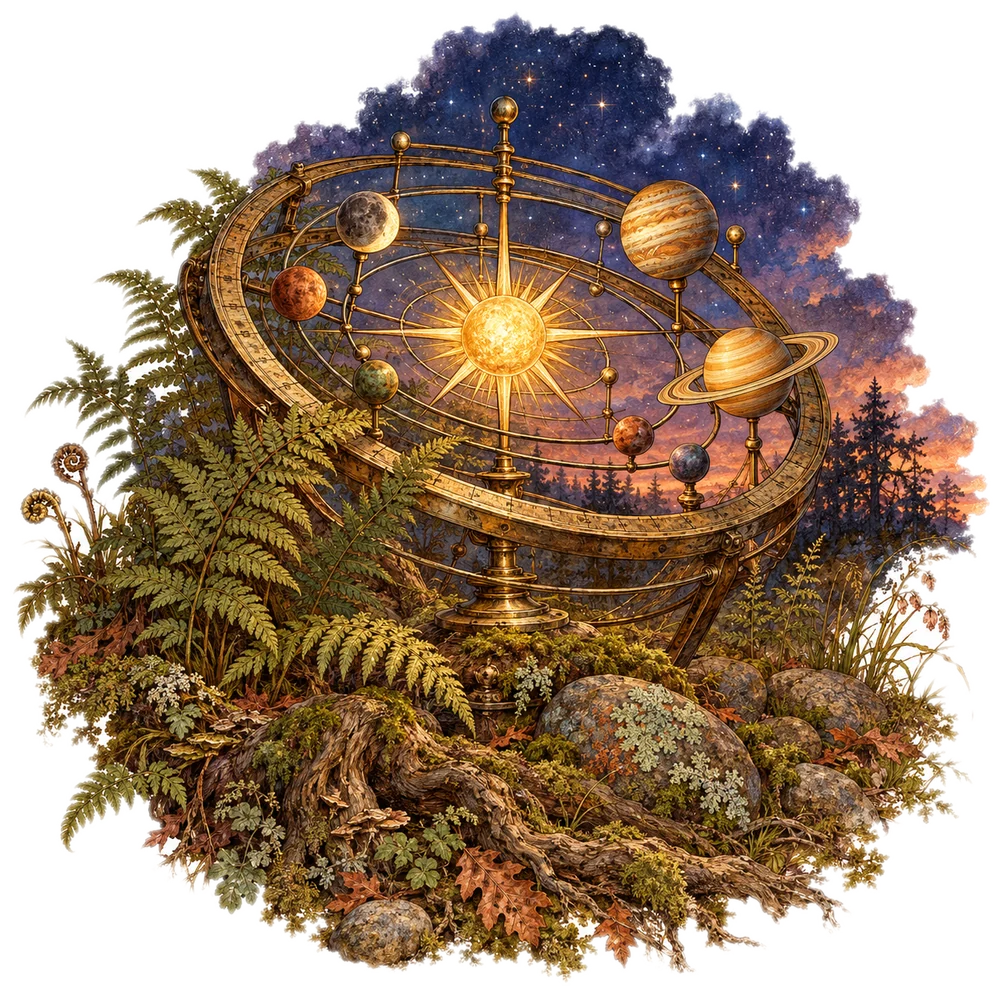
Internal Family Solar Systems (IFSS) is a way of getting to know the many parts of you, with the planets of Vedic astrology as the map. It builds on Richard Schwartz’s Internal Family Systems (IFS) and pictures the calm, compassionate Self at your center like the Sun, with your parts in orbit around it.
What is IFSS?
Internal Family Solar Systems / IFSS / noun
Have you ever said, “I don’t know what came over me”? IFSS is about what comes over you, and about who is still there when it passes.
IThe Self at the center, like the Sun
IINine planets as archetypal parts
IIIA chart that shows when each one leads
In plain words / Two maps that slid together
Internal Family Systems, the model of the psyche developed by Richard Schwartz, describes the mind as a family of parts: the planner, the critic, the people-pleaser, the one who reaches for the phone when things get tender. At the center is what Schwartz calls the Self, calm, clear and compassionate. It can be hidden for a while, but it is never damaged.
Vedic astrology, or Jyotish, says something similar in another language. Everyone has every planet, and each one carries an archetype you already know from myth and from your own week. Your birth chart shows where each of these parts tends to live and when it takes its turn to lead.
IFSS puts the two maps together. The Self sits at the center like the Sun, and your parts orbit it like planets. When life gets scary or stressful, the orbits warp, one part grabs the controls, and the Self vanishes from view. The work is to help each part find its natural orbit again.
“Just like the planets that orbit the Sun, your parts orbit the center of gravity that is your true Self.”
Telfer
How it works / Four ideas
Part of you wants to go, and part of you wants to stay. Our language already knows we are many. Saying “a part of me feels this” makes room inside, so no single voice has to speak for all of you.
From Internal Family SystemsThe Sanskrit word for planet, graha, means “seizer”: whatever grabs hold of you. When a part takes over, it is like looking through a tinted lens, and the whole world takes on its color. Stepping back from the lens is called unblending.
From Vedic astrologyRichard Schwartz’s great teaching is that there are no bad parts. Even the harshest inner critic is trying to help. IFSS adds that there are no wrong notes: a note that sounds wrong on its own can give the music its depth in the right company.
Harmony, not repairAstrology here is a highly structured mirror. A forecast doesn’t make the rain. It tells you to bring a coat. Your chart shows which parts are likely to take the stage, and when. What you do about it is up to you.
Timing and tendenciesThe nine lights / Nine planets, nine parts
The family album
Each light carries one quality of the Self, and each can drift out of tune in two ways, by doing too much or too little. Those shadows are parts working hard, not bad ones.
The king at the center of the court. A sovereign rules itself first, and trusts itself to create a way forward.
Out of tune: the tyrant, the abdicantThe queen who feels. She looks for what is hurting and how it can be restored.
Out of tune: the martyr, the enablerThe commander, red and quick. Life needs protecting before anything else is possible.
Out of tune: the soldier, the perpetratorThe youngest at court, carrying messages and asking a thousand questions.
Out of tune: the escapist, the deceiverThe teacher of the gods. Mercury gathers the facts, and Jupiter tells you what they add up to.
Out of tune: the fundamentalist, the cynicThe teacher who works with desire instead of against it. Creativity is love making something.
Out of tune: the hedonist, the tempterThe keeper of the hall, who takes responsibility and brings order slowly, without needing the credit.
Out of tune: the jailer, the drudgeA head with no body, forever reaching toward new and unknown possibilities.
Out of tune: the hungry ghost, the illusionistA body with no head, forever letting go of what no longer matters.
Out of tune: the vanisher, the renouncerThe eight qualities of Self are Richard Schwartz’s. The royal court of the planets follows Parashara, as Freedom Cole lays it out in Science of Light.
Where it came from / One crossing, two maps
The story behind it
Telfer has lived with anxiety and, at times, deep depression since he was a child. The search for what actually helps led him to ashrams and eco-villages, to Ayurveda, and to Vedic astrology, which he has studied since 2009.
In 2020 he completed the IFS Institute’s online circle and began working as an IFS-informed guide. Schwartz teaches that parts are innate, always already there, and that life calls some of them forward. Vedic astrology says that a Mars period doesn’t hand you a Mars. It turns up the volume on the one you’ve had all along. Two maps slid together and became one.
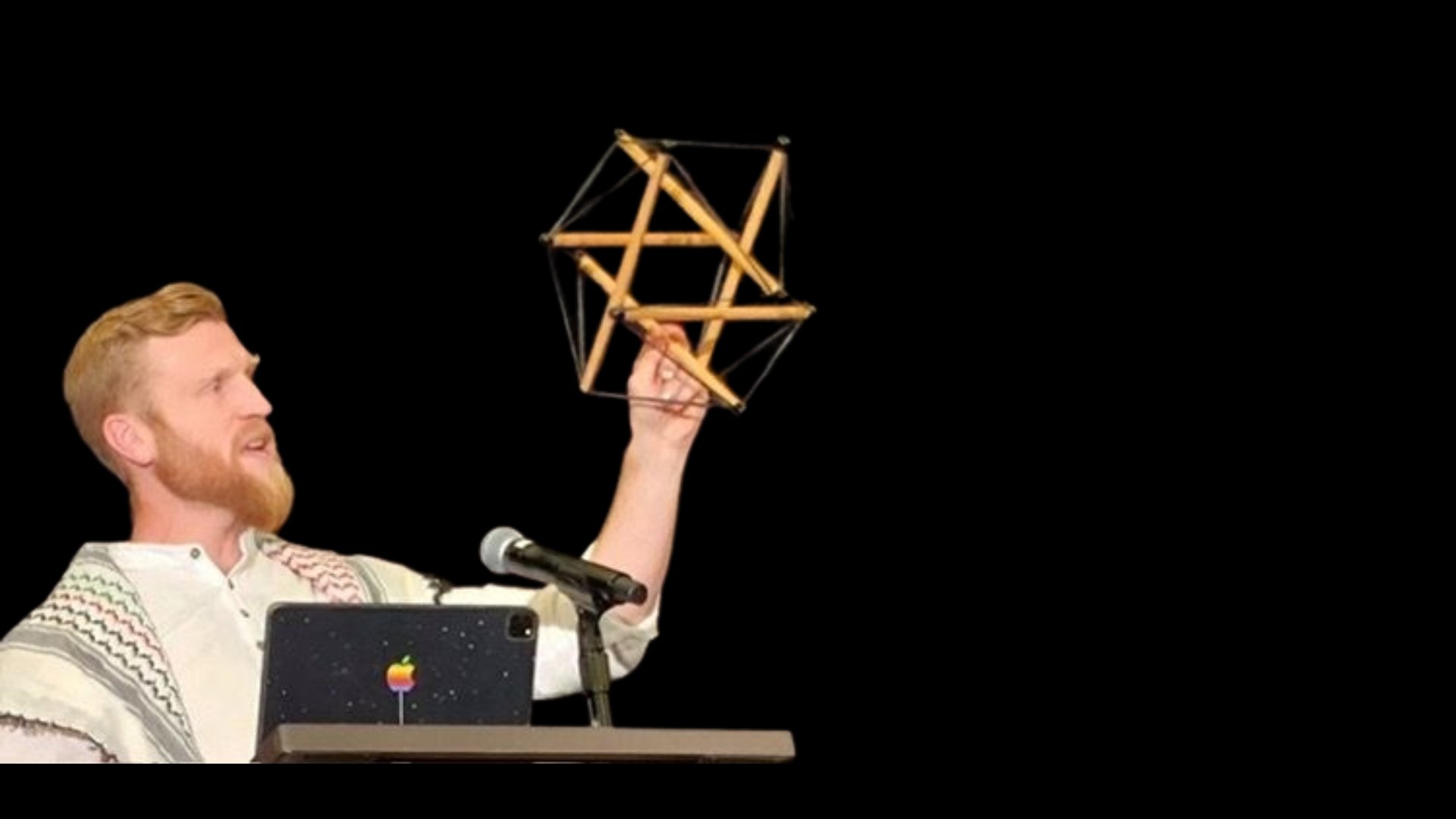
He taught IFSS in live seasons, then wrote it up as his Doctor of Divinity dissertation, Internal Family Solar Systems (2026). It also borrows Buckminster Fuller’s tensegrity, structures held together by balanced tension, as a picture of how parts hold one another in place.
Read the dissertation, chapter by chapter →Explore IFSS / Four ways in
The free Ecotone Assessment asks what you do on uncertain ground. Its nine instincts are the nine lights in disguise.
Take the assessment ↗All thirteen parts are free on Substack, from the prologue to the case study and conclusion.
See the chapters →IFSS is taught live in the Council at Ecotone Academy, a small circle that moves through one craft per season.
Join the waitlist ↗For conferences and clinicians: the IFSS talk asks, “What can therapists do about astrology?”
Speaking →Curious which planetary chapter you’re living in now? Your planetary chapter explains it in plain words.
Questions / Asked and answered
IFSS is a way of getting to know the many parts of you, with the planets of Vedic astrology as the map. It builds on Richard Schwartz’s Internal Family Systems and pictures the calm, compassionate Self at your center like the Sun, with your parts in orbit around it.
No. IFSS builds on Internal Family Systems, the model of the psyche developed by Richard Schwartz, and adds Vedic astrology as a map of the parts and their timing. Telfer is IFS-informed, and IFSS is not affiliated with or endorsed by the IFS Institute.
No. The planets are archetypes, and you will recognize them in yourself long before you look them up. When you are curious, your date, place and time of birth add detail.
No. It is spiritual guidance and self-inquiry. It can sit beside therapy, and it does not replace care from a licensed professional. If you are in crisis, call or text 988 in Canada and the US, or your local emergency number.
No. In IFSS the chart is a highly structured mirror. It shows which parts are likely to take the stage, and when. What you do about it is up to you.
Telfer, a Wild Mind Guide and Vedic Astrologer and the founder of Ecotone Academy. He developed it from his IFS training and his study of Vedic astrology since 2009, and wrote it up as his Doctor of Divinity dissertation in 2026.
Next time something comes over you, try saying “a part of me” and see who answers.
Here for your own journey?
A short set of questions that returns a written reading of the terrain you are crossing, plus free entry to the Ecosystem, the Ecotone Academy community and library.
Take the assessment ↗